
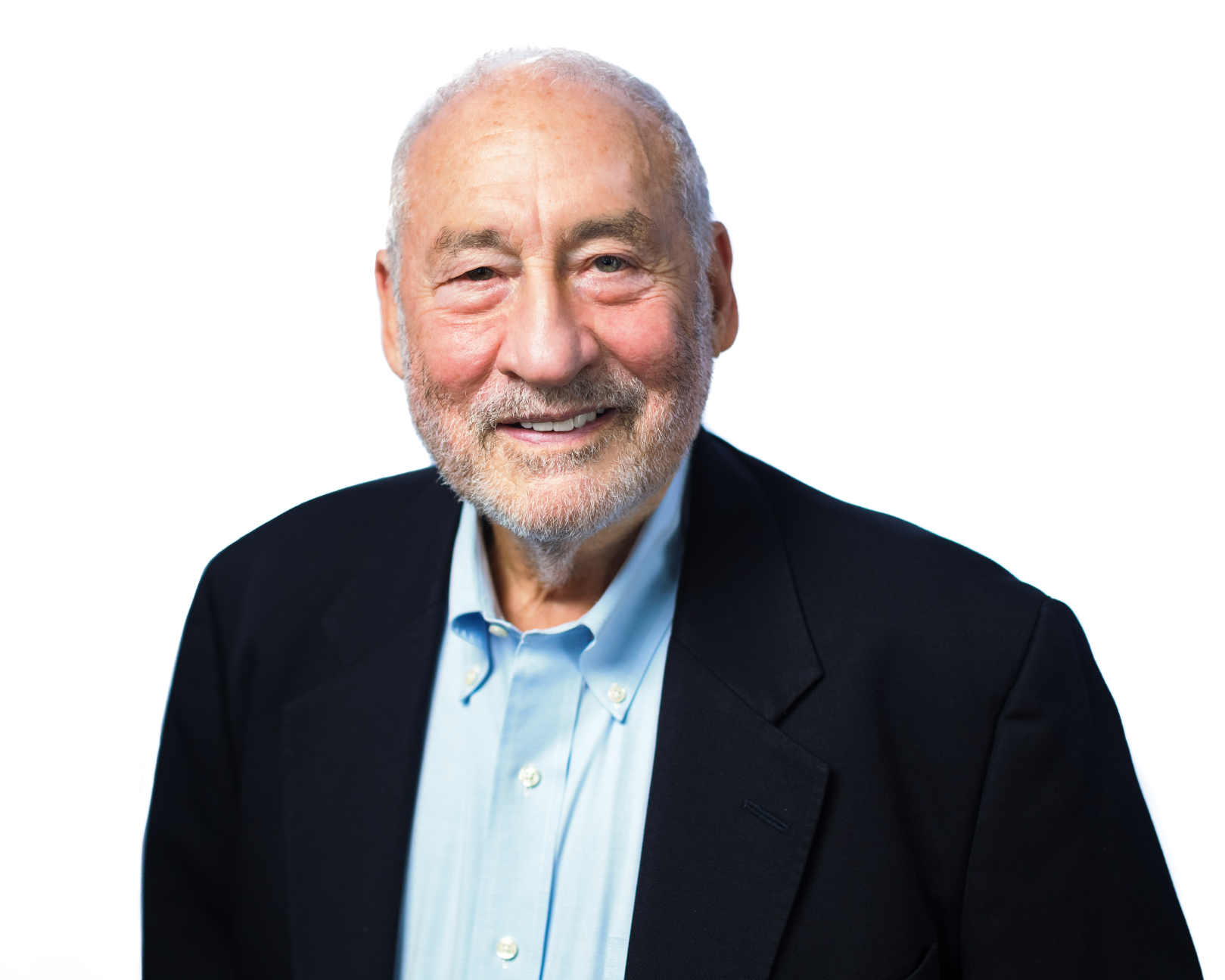
Image credit: Ian DeSalvo
“Advertisers should not advertise in media that are irresponsible”
Few economists are better placed to examine the impact of artificial intelligence on the information ecosystem than Joseph E. Stiglitz. Awarded the 2001 Nobel Prize in Economic Sciences, together with George Akerlof and Michael Spence, for his analysis of markets with asymmetric information, Stiglitz helped demonstrate that markets behave very differently when some participants know more than others, and that such imbalances can prevent them from producing socially desirable outcomes.
Those insights have obtained new urgency in the age of artificial intelligence. In June 2025, Stiglitz took part in the annual conference of the Observatory for Media and Responsible Information in Madrid, where he warned that democracies and economies cannot function properly without a reliable information ecosystem. He argued that information should be understood as a public good and drew attention to a growing contradiction: while professional journalism remains expensive to produce, digital platforms have built highly profitable businesses by capturing attention, appropriating news content and rewarding outrage over accuracy.
A year later, Elena Herrero-Beaumont, director of the Ethosfera Foundation and co-director of the Observatory, continued that conversation with Stiglitz. His latest paper, Information in the Age of AI: Challenges and Solutions, which he co-authors alongside Màxim Ventura-Bolet, a PhD candidate in Economics at Columbia University, develops an economic framework for understanding how AI could transform the production, distribution and consumption of information, and under what conditions it might ultimately weaken, rather than improve, society’s access to knowledge.
At the heart of their analysis lies a fundamental imbalance. High-quality information is costly to investigate, verify and produce, yet much of its social value cannot be captured by those who create it. Mis- and disinformation, by contrast, is cheap to generate, profitable to distribute and increasingly difficult to distinguish from reliable content. AI deepens this imbalance by diverting audiences and revenues away from original producers, dramatically lowering the cost of plausible falsehoods and accelerating the technological contest between deception and verification.
This interview shows what this means in practice. Rather than treating misinformation simply as a problem of harmful content, Stiglitz and Ventura-Bolet approach it as a structural market failure. Their argument is that AI will not automatically create a better-informed society. Without changes to the incentives governing the information economy, it could produce the opposite: an apparently abundant information environment resting on a steadily shrinking supply of original, verified knowledge.
Listen to the full interview here:
Elena Herrero-Beaumont: Based on the balance between true and false information, determined by the incentives to produce and consume it, you present three information equilibria in your paper: the truth equilibrium, the mixed equilibrium, and the equilibrium where our information ecosystem collapses. In which equilibrium do you envision society today? Where are we headed?
Joseph E. Stiglitz: Well, first, both incentives and costs are what matter. The cost of producing mis- and disinformation has gone down because we have a system with very little accountability. Those who engage in producing mis- and disinformation do not pay the full consequences for their actions. The rest of us, however, have to spend enormous resources sorting out the good from the bad information. One way of thinking about this is that those with bad information pollute the information environment. Sadly, regulation of pollution in the information ecosystem does not happen. As such, we find ourselves in the mixed equilibrium, identified in the middle, where there is lots of good information, but also a lot of garbage.
Màxim Ventura-Bolet: We are worried that the foundational forces of our model would lead towards the equilibrium where there are only lies. Untruthful information and misinformation are the ones which have the most force nowadays. In that sense, the relative cost of producing misinformation is getting lower than ever.
Elena Herrero-Beaumont: In your paper, you mentioned that one of the issues related to digital systems and AI is the undersupply of good information, mainly due to unsustainable financial revenues on the side of media firms. So how can we cover the costs associated with publishing truthful and high-quality information?
Joseph E. Stiglitz: First of all, information produced by news media is a public good. We all benefit if we have a better understanding of the world around us. It’s always been difficult to appropriate the social benefit of good information. In the past, the industry has had a peculiar business model: the media that produces good information gains prominance, people want to read it, which generates revenues through advertising. This wasn’t a perfect model, but it worked: we had a lot of high quality media. Changes began twenty years ago when intermediaries, like social media and AI, emerged, taking the information produced by the media and distributing it.
Unfortunately, we allowed these intermediaries to distribute information without compensating those from whom they were taking it. Ordinary consumers stopped going to traditional media sources like the New York Times, and instead, started using social media or AI. The issue is that when nobody goes to traditional media outlets, they won’t sustain their revenue. The diversion of revenue streams from the legacy media to social media has been enormous. And AI puts the issue of revenue streams diversion on steroids which is the fundamental challenge that we face today.
Joseph E. Stiglitz: The answer is then twofold. First, making those who take information from the traditional media pay for it because it’s intellectual property. Those who generate it ought to be compensated. Second, the role of government support since information is a public good. There’s always been a worry that government support for the media will lead to politicalization, but in fact, countries like Sweden and the UK have shown that you can set up institutional arrangements that protect you against that risk. Public media there have an enormous amount of respect, even more than the private because the private often represents the interests of billionaires and oligarchs. Those are the two strategies for answering.
Màxim Ventura-Bolet: When you want to make the intermediaries pay the original producers, you have to take into account the difference in power that the two sides have. When information publishers are very small compared to large social media and AI firms, there can be bargaining asymmetries regarding the price set for original, high quality information .
Joseph E. Stiglitz: Australia’s competition authority recognized this asymmetry of power and said there has to be bargaining in good faith. There, if the weaker side believes there has been abuse of market power, they can appeal to the competition authority.
Elena Herrero-Beaumont: Many readers cannot differentiate what’s true and what’s false anymore. What solutions do you think are working right now to combat this problem? Do you think media literacy is working? Who can best place incentives for acquiring these sorts of skills: universities, schools, workplaces?
Joseph E. Stiglitz: Being able to tell good from bad information is important, but new technologies are designed to make it difficult even for those who are well trained. An example of such deceiving methods are deep fakes. There’s always been the hope that technology itself will come to the rescue: new technologies would enable us to see whether something that you got was produced by AI or whether it’s consistent with some other sets of data. In that sense, technology itself can be part of media literacy but it doesn’t solve the more central problem of accountability. Right now there’s a race, you might say, between the ability to create deep fakes and the ability to detect deep fakes. Sadly, the ability to create right now is winning, which is why we need accountability.
Màxim Ventura-Bolet: Unless there’s a world where each person has their own “me” agent that is reading everything at the same time as a user and is not biased, it will always be harder to be on the verifying side than on the misinforming side.
Elena Herrero-Beaumont: You also promote as a policy recommendation public support of media companies. What are the risks of these recommendations in terms of politicization or in terms of making certain media companies too big? In Spain, the government finances media companies through the so-called institutional advertising scheme. For them, this advertising revenue could sometimes represent 16% of their total revenues. But this also generates a lot of potential for politicization in our media landscape. In this context, how do you minimize these risks?
Joseph E. Stiglitz: Let me go back to the point I made before, which is: information is a public good. We all benefit from better information. The basic economic principle is that a public good needs to be publicly financed to at least some extent. What we have done in the West has been to delegate responsibility for the production of news, basically to the richest people who can own the media. They often do it not for the economic returns, but for the influence they have in our society. Because the media have an enormous potential influence. They can interpret the world in a particular way that is consistent with their political agenda. Once you recognize that, you also recognize that if we’re going to have a democratic society, we need to have independent and diversified sources of information and cannot rely just on, say the oligarchs, to provide information. And that’s where, as I say, public provision becomes important. There are ways of doing public provision that create diversity: you can create more than one public radio and TV station. You can support, as Scandinavian countries often do, a second newspaper in various localities. You can create institutional frameworks that make sure they act in an independent way. And as I mentioned before, several countries have done this in ways that have created trust in the public media, more trust than there had been in the private media. Obviously there are risks and there are downsides, for instance, in using advertising, because you can allocate advertising to friends and to cronies. That’s why I tend to prefer direct support for public media with systems of accountability which ensure independence and quality.
Màxim Ventura-Bolet: Yeah, I think that’s definitely a step in the right direction and something that we need, but it’s not solving the problem of the incentives that they cannot produce if they don’t have earnings. And so if you actually have public support here to cover for these incentives and you do apply these high standards of transparency, then you might be able to have a workable solution.
Joseph E. Stiglitz: In a democratic society we obviously are going to allow private media. That is a part of free speech, free press. The problem is, do we have a public source that is not controlled by the oligarchs, that we can have confidence in? That’s why I think it’s important to have public support. We can have public support for independent media that prove their quality. So both of those are channels by which we can help create what I would call a good marketplace of ideas: a diversified media that we can have greater reliance on than the current information ecosystem, where, unfortunately, there is too much mis- and disinformation.
Elena Herrero-Beaumont: Have you been discussing this with public officials? In a world that’s turning into an ever more pronounced autocracy, a kleptocracy, is there room for optimism when regarding these policy recommendations?
Joseph E. Stiglitz: We are in a moment where in some countries there is room for creating or moving more towards this kind of architecture. Right now, in the United States, our focus is on saving our democracy and making sure we don’t have an authoritarian leader. So, no, I’m not optimistic about these policy recommendations in the States. But I am optimistic that increasingly in other countries where there are stronger democracies, there will be an understanding that unless there is a better information ecosystem, the impact would not just fall on the economy, but on the whole democratic system and its strength.
Elena Herrero-Beaumont: To finish, I want to share with you measures for better information we have initiated in Spain. The Media Observatory has decided to work with large advertisers on standards of responsible information, or in other words, what big, influential companies can do when it comes to managing the risks of disinformation in their corporate agendas, and what sort of standards they can work on to protect responsible information. One of those standards has to do with how much funding they give to social media versus media brands that are working on their integrity and have self-regulation standards of independence and credibility. Disinformation is, sadly, also a business, and many companies fund it knowingly or not. So, we are going to intervene in that. We are not just working with media organizations. Trying to make them more transparent and better governed is our broader goal, so that their audiences, advertisers, and other stakeholders can support them.
Joseph E. Stiglitz: That’s a wonderful model, but one more thing in terms of standards that I think is important, that again you might say related to Facebook’s parent company, Meta, is advertisers should not advertise in media that are irresponsible. One example of irresponsibility is violating privacy. I’ve heard that about ten percent of Meta’s revenue is associated with scams. There have also been important cases where Meta had been notified of a scam, to which the company’s response was “that’s not our problem.” They have deliberately taken advantage of what they believe is lack of accountability, putting the burden on those who had been taking advantage, while most individuals don’t have the resources to sue. So I think part of the standards ought to be that you do not advertise in irresponsible media or social media, especially like Meta which has been violating basic standards like allowing scams and violating privacy.
Elena Herrero-Beaumont: I absolutely agree with that. I want to conclude our interview by asking you what actions you would like to implement now, having formulated and published your policy recommendations. Are you going to share them with EU or US public officials?
Joseph E. Stiglitz: I’m a little bit more of an activist. So, if the European Parliament asks me to testify or to explain these ideas, I’d love to do that. We talked about good information and misinformation. Hopefully our paper is part of the good kind that enters into the information ecosystem and enhances our understanding about why its quality may be going in the wrong direction.
Màxim Ventura-Bolet: And maybe we haven’t presented it to the EU or the American government, but we have many interested policymakers and relevant conferences which will hopefully use some of these insights.
María Georgieva, Ethosfera fellow, conducted the associated research and writing for this interview.